New research explores the potential benefits and challenges of using therapy dogs in dialysis clinics.
Waving goodbye to his wife, Jim felt the familiar mélange of emotions simmering inside of him rise to a boil. Beyond the gnashing jaws of the automatic doors lay the dialysis clinic, a place filled with memories of pain, fatigue and unimaginable boredom. For a moment, he considered leaving, crossing the busy hospital car park, and catching a bus into town. But it was only a fleeting thought—Jim needs dialysis to live.
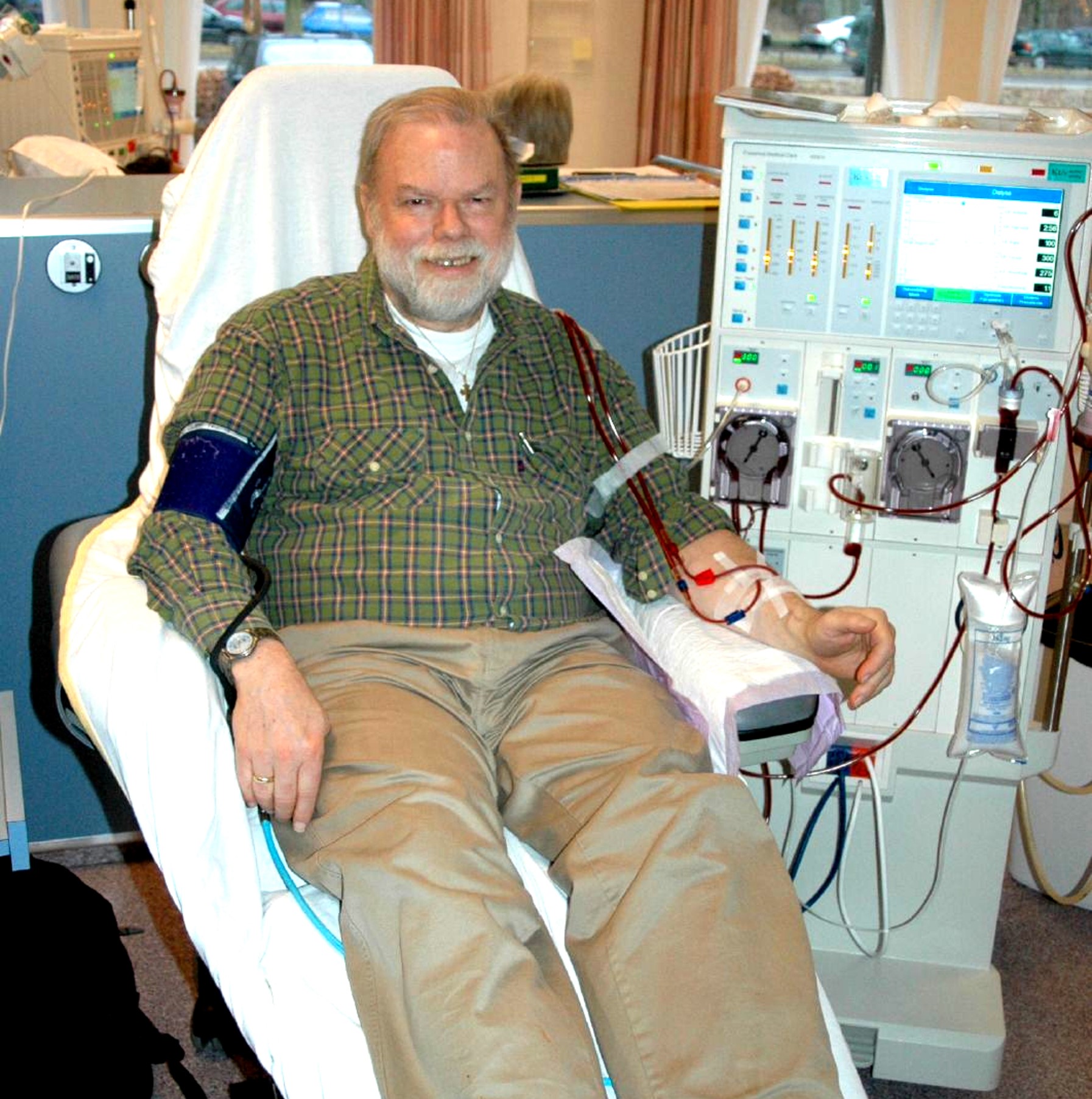
Over half a million Americans receive hemodialysis up to five times a week to remove waste products from their blood because their kidneys cannot perform this task sufficiently. Each session takes around four hours, and the process can be painful and distressing. In an attempt to support patients and improve treatment adherence, a recent qualitative study has investigated the potential benefits and challenges associated with the introduction of therapy dogs.
New research into therapy dogs’ use
Therapy dogs visit vulnerable individuals in settings such as hospitals and care homes to provide affection, comfort and support. The pet dogs are assessed for temperament and behaviour, and visit alongside their owner/handler through schemes such as Pets as Therapy. Previous research has found that therapy dogs can improve patients’ quality of life, reduce depression and reduce agitation.
The researchers from Texas, US, explored the attitudes of 20 participants, recruited from four outpatient wards, towards the inclusion of therapy dogs into dialysis clinics through one-to-one in-depth semi-structured interviews. The audio from the interviews was recorded, transcribed and analysed which revealed four major themes: The dread and suffering of endless treatment; Yearning for the presence of therapy dogs at the clinic; Therapy dogs can aid in the internal battle of treatment adherence; The logistics of incorporating therapy dogs into hemodialysis care routine.
The dread and suffering of dialysis
Participants described hemodialysis treatment as physically, psychologically and socially straining. The theme was characterised by feelings of dread, entrapment, and psychological distress, highlighting the need for interventions to help support patients’ mental wellbeing.
“We’re just miserable here. It’s not something you want. It’s a miserable place to be. You’re on four hours of dialysis, here is your 16 h’ shift of work. That’s how bad we feel when we go home. You don’t want to walk. You don’t want to move. All you want to do is go home and go to sleep. And then most of the time, you’re throwing up … it’s just sad.”
Yearning for therapy dogs at clinic
In this theme, participants expressed a desire to see therapy dogs at clinic to offer companionship and comfort during challenging times. They also mentioned dogs’ ability to give these without judgement, and also to provide distraction during the long hours of treatment.
“Just holding them (the therapy dogs), feeling their heartbeat and with their nose nudging close to you know they feel your comfort, your warmth, your love. You’re giving it back. You’re both giving something to each other, and that makes the world go around.”
“Since we have to be in the chair, not moving, the dog would be there to help get our focus on something else. Because in the chair, it’s just like you’re in prison. You can get up if you have to go to the bathroom. But they only give you two times to disconnect. So, I would say just getting your mind focused on something else other than this prison chair we have to sit in.”
Therapy dogs boost treatment adherence
Non-adherence to hemodialysis treatment can result in severe healthcare complications and the need for more treatment. For this reason, it’s vital that patients attend their appointments, but previous initiatives have enjoyed little success. Participants described the anticipation of interacting with the therapy dog as a motivator to attend treatment regularly. The emotional support provided by the therapy dog may also remove some of the psychological barriers to attending appointments.
“Right at the beginning of dialysis, I did (skip scheduled treatments). It’s not that I was missing. I guess it was almost denial that I didn’t need it. And I did wind up at the hospital … then it just stuck to me and I said, You know what? This is the only way you can live. Make the best of it. So I know that this would help with the dogs because at least I can say it’s something different. Another interaction with the dog, it would be better.”
The logistics of incorporating therapy dogs
The practical considerations raised by participants on the inclusion of therapy dogs into hemodialysis treatment included where the dog should be located within the clinic, whether in waiting rooms or treatment areas. They also emphasised the importance of dogs being well-trained, clean and calm, highlighting the need for a structured approach to ensure the health and welfare of everyone.
“I’d probably see him (the therapy dog) in the waiting room. Because when I’m in the treatment room, I’m just scared, you know? It’s just the dog moving around might hurt me, and my arm (hooked up to dialysis machine) is a mess.”
Moving Forward
The findings of this study highlight the potential of therapy dogs to improve patients’ experience of hemodialysis. The participants perceived many advantages of the dogs’ presence, but also highlighted challenges that would need to be overcome. A possible next step would be to repeat the interviews with medical staff to explore their attitudes on the benefits and drawbacks of incorporating therapy dogs into dialysis clinics. It would also be beneficial to interview patients and staff who do not wish to be around dogs (e.g. allergies, phobias) in order to better understand how to safeguard their health and wellbeing.
The study contributes to the growing body of scientific evidence supporting the use of therapy dogs in a broad range of settings, from schools to natural disasters. Therapy dogs can be an invaluable source of emotional and social support for a wide variety of people, including children with autism and older adults with dementia. If you have an easy-going dog who would enjoy calmly interacting with others, you could consider volunteering your time to brighten someone’s day with organisations like Pets as Therapy (UK) or Dogs on Call (US).
Key study findings:
- Overall, participants welcomed the inclusion of therapy dogs into dialysis clinics
- Perceived benefits from therapy dogs included comfort and a positive distraction
- Therapy dogs could boost treatment adherence by providing an incentive and support
- Logistical considerations raised about whether the dogs should be in the treatment room

 The Power of Pets
Leave a comment