New research investigates the underlying mechanisms and physiological impact of interacting with horses in veterans with PTSD.
Equine-assisted interventions, using interactions with horses to improve human health and wellbeing, have become increasingly popular in recent years. In particular, previous research has highlighted the positive impact of equine-assisted interventions on veterans suffering from post-traumatic stress disorder (PTSD). However, a recent study has delved deeper into this relationship, shedding light on the underlying mechanisms and physiological impact of interacting with horses.
In the US, 11-30% of veterans are believed to suffer from PTSD, a mental health condition characterised by re-experiencing traumatic events and performing avoidance behaviours, as well as experiencing low mood and increased arousal. Traditionally, PTSD has been treated using a combination of medicines and psychological therapies, but there is a growing interest in complementary approaches such as equine-assisted interventions.
New research on PTSD in veterans
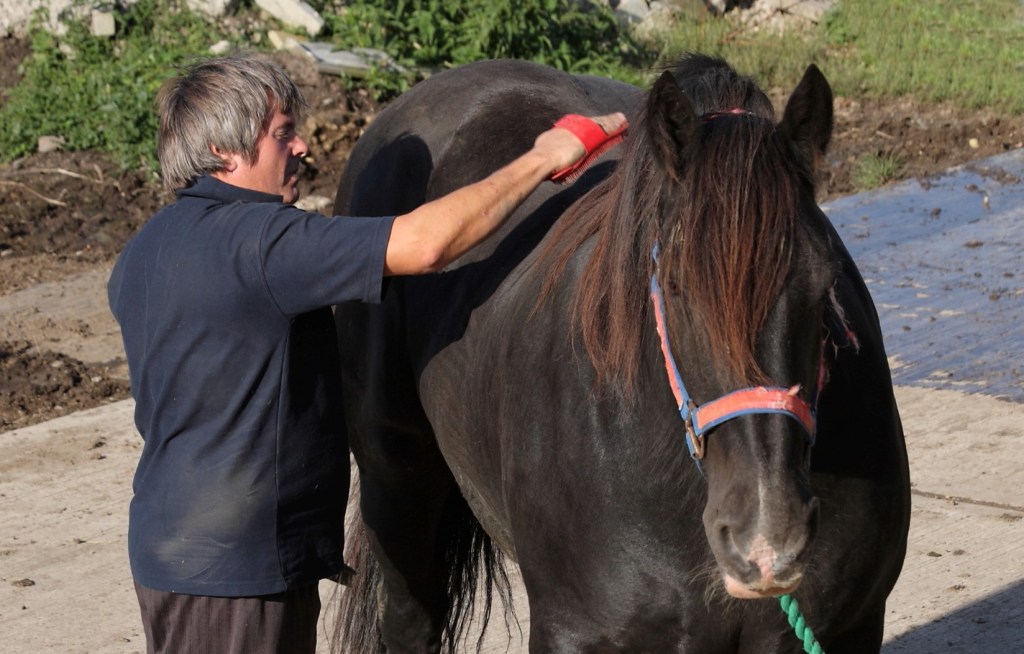
The randomised controlled pilot study, conducted by researchers at Rutgers University, included nine veterans, aged 18-75 years, with a diagnosis of PTSD. These participants were randomly assigned to the adaptive horsemanship condition, which focused on aspects of horse care such as grooming, or the waitlist control condition, where they continued their usual activities.
The adaptive horsemanship lessons lasted 30 mins and took place weekly for a period of eight weeks. During this time, veterans’ PTSD symptoms, hormone concentrations, and social motor synchrony were measured at four time points: before and after the intervention, and at a 2 and 6 month follow up.
The therapeutic effect of horses
The findings of the study revealed that veterans in the adaptive horsemanship condition experienced a significant reduction in psychological distress compared to veterans in the waitlist control condition. In particular, a reduction in depression, hostility and paranoid ideation were observed.
In addition, whilst most hormones remained stable over time, veteran’s levels of epinephrine (part of the body’s fight or flight response to stress) reduced over time in the adaptive horsemanship condition, suggesting that veterans experienced a reduction in stress as they became more comfortable with their surroundings and the horses.
No significant changes were observed for veteran’s social motor synchrony, which measures the coordination of movements between individuals, although improvements in their interactions with the horses were captured on the Human-Animal Interaction Scale. This suggests that veterans experienced more positive interactions with horses the more time they spent with them.
The future of equine-assisted interventions
The biggest obstacle that researchers reported was recruiting and retaining participants before the intervention, but once the intervention began, attendance was consistent. This presents an opportunity for future equine-assisted interventions to enhance their recruitment strategy.
Overall, the results of the study offer preliminary evidence that adaptive horsemanship lessons can reduce PTSD symptoms in veterans. This finding lends further support to the growing body of evidence championing the therapeutic effect of interacting with animals. However, further large-scale research is essential to fully understand the health and wellbeing impact of equine-assisted interventions on veterans with PTSD.
Key study findings:
- Participants in the adaptive horsemanship condition enjoyed reduced psychological distress
- No significant changes observed in veterans’ hormone levels
- No significant differences observed in veterans’ social motor synchrony

 The Power of Pets
Leave a comment