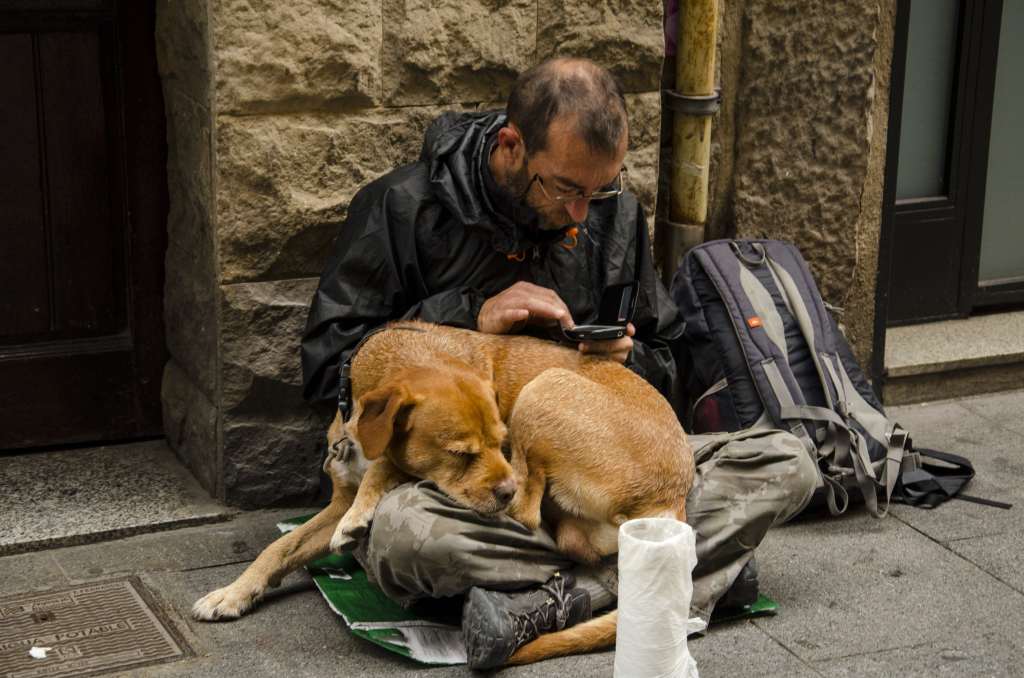
Homeless people shouldn’t have dogs because they can’t even take care of themselves, but now science is challenging this commonly held assumption.
Previous research has revealed that homeless dog owners enjoy a range of health and wellbeing benefits associated with pet ownership, including reduced depression and loneliness. Yet despite this, public sentiment is still very much against homeless people owning pets because it’s assumed that their lifestyle is incompatible with good animal care. However, a recent study investigating the lives of these dogs has showed them to be well cared for and in good health, forcing us to think again.
New research into dog health
During the study, 100 homeless dog-owner pairs in the Western United States took part in a survey and visual assessment. The survey collected information on various factors of dog ownership, including previous experience with dogs, where their dog was obtained from, and opportunities for exercise. Whereas the visual assessment collected data on the physical health of the dog, dog breed, attachment to the owner, and dog behaviour.
The results found that the dogs were well cared for, physically healthy and active, with a healthy weight. Most dogs were fed a high-quality dog food obtained from pet food banks. The dogs were found to be friendly, with few behavioural issues, although it was observed that some dogs did become distressed when separated from their owner. Two older dogs also showed signs of hair thinning, but these were being assessed by Street Dog Coalition which provides free veterinary care to people experiencing homelessness. The most common breed of dog owned was an American Pit Bull Terrier, although many dogs appeared to be mixed breeds.
Supporting homeless pet ownership
The finding that the vast majority of dogs enjoyed a positive welfare state contradicts the belief that homeless people cannot care for their pets. Instead, it suggests that more needs to be done to keep pets and owners together for mutual benefit. To do this, a shift is needed towards more inclusive policies that recognise the importance of the bond between homeless people and their dogs, and advocating for accommodations that allow them to stay together.
Key research findings:
- The dogs were well cared for and physically healthy
- Most dogs were fed a high-quality dog food
- The dogs were friendly, with few behavioural problems

 The Power of Pets
Leave a comment