New qualitative research evaluates the feasibility and impact of dogs in mental health settings.
Making our way down the familiar, sterile corridors of the secure forensic mental health unit, my dog’s presence seemed to draw people out of their rooms: a nurse, the shift manager, a cleaner. Initially, the conversation focused on Lyra, a soft and silly Labrador mix, but as more people arrived, it shifted to work matters—it had obviously been a difficult day.
After twenty minutes or so, an exhausted-looking nurse rounded the corner and dropped to her knees, extending her arms towards Lyra. She didn’t say anything; she didn’t need to, as Lyra rushed to fill her embrace. They stayed like that for a long moment, Lyra’s tail polishing the floor behind her. “This is the happiest I’ve felt all day,” the nurse said in a soft voice.
Therapeutic effect of dogs
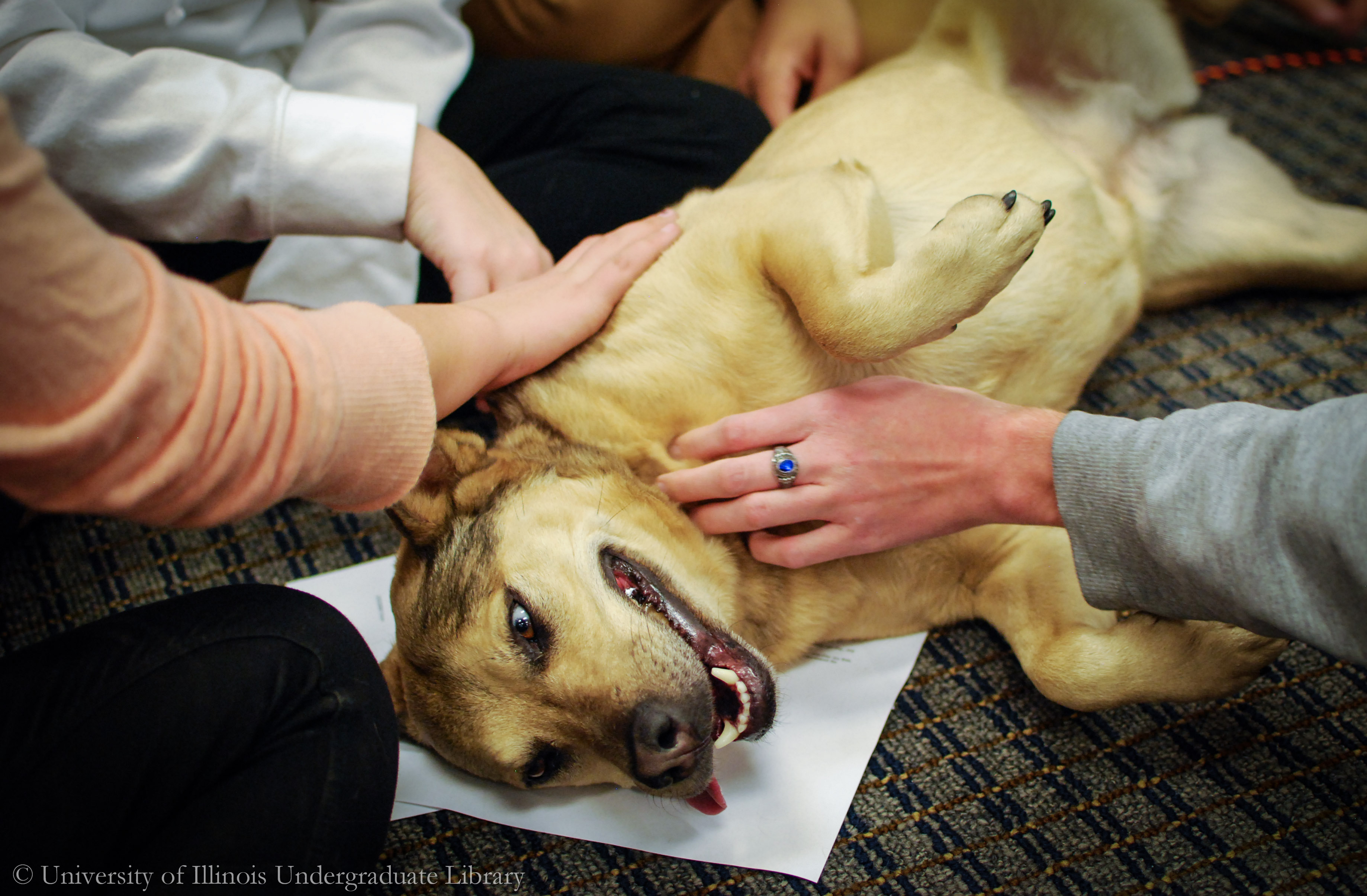
The use of dog-assisted interventions, also known as therapy dogs, to offer comfort and emotional support in settings such as hospitals and care homes has exploded in popularity over the past few decades, alongside scientific inquiry into its effectiveness. Previous research has found that interacting with therapy dogs can reduce patients’ experience of pain and anxiety.
Therapy dogs have also been used to improve the wellbeing of staff in high pressure physical health settings. Previous research has observed that a short interaction with a dog can reduce stress in emergency medicine providers, and improve outpatient nurse welfare and job satisfaction. A recent study also investigated the feasibility and impact of introducing dogs to mental health workplaces on staff wellbeing.
New research into mental health settings
To evaluate the introduction of therapy dogs into mental health workplace settings, researchers from the West London NHS Trust and Queen’s University of Belfast recruited 12 participants from three teams: Crisis Assessment and Treatment (6), Recovery College (5), Inpatient and Outreach Psychiatric Service (1).
Each team had contact with a dog (Hetty, Connie & Nelson) who were owned by someone in their team and had passed the Pets as Therapy temperament assessment. Semi-structured interviews explored staff perspectives on the “acceptability of dogs in mental health teams; the impact of the dogs on themselves directly, their patients, and their team; and the challenges of implementing dogs in mental health settings.”
The interviews were recorded and transcribed, before being thematically analysed which revealed six major themes: “facilitating staff wellbeing, improving workplace morale, facilitating communication, impact on dog owner, environmental challenges, and improving perceptions of dogs”.
Facilitating staff wellbeing
The presence of the dogs in the workplace encouraged positive behaviours, such as taking breaks to engage with the dog. Participants also highlighted the stress-relieving effect of activities such as stroking the dog, which was compared to mindfulness and referred to as therapy.
“So, I actually had a day that was really overwhelming…I remember feeling really overwhelmed in the office and just being like “Oh, I can’t deal with this right now.” And Hetty was there, so I genuinely just kind of plopped her on my lap . . . and she just sat there and literally just stroked her for like a good five minutes, and I was like “I’m having a therapy session now.””
Improving workplace morale
Dogs boosted workplace morale by improving the atmosphere and giving staff members something to look forward to, which made them think that their organisation cared about their wellbeing.
“You can see the team on a particular day that she’s [Connie] in, it’s a lot more, closer together and, you know, everyone’s a bit more, happier, you know, a bit more relaxed. There’s definitely a difference in relationships and presence when she’s there and she’s not there. It brings a team together a lot more.”
Facilitating communication
Participants highlighted dogs’ unique ability to facilitate communication with team members and service users through a common bond.
“When she’s [Hetty] here it seems, most people spend more time in the office. We’ve got like an office down the other way, and people used to go in there to do their notes and stuff, but when Hetty’s here they’re all in the office, so it seems to make things a bit lighter.”
Impact on dog owner
Since all dogs included in the study were owned by staff members, bring their dogs to work placed an additional burden on the owners, who reported a feeling of responsibility and anxiety about their dog’s behaviour.
“The fact that I’ve got a dog. I get pulled in a bit more than I should be clinically, you know, like patients and nurses. I’ve got an open-door policy anyway. Yeah, but, you know, I have to keep remembering the boundaries of sort of patient comes in and is sitting on the floor. I’m just working and they’re tickling and cuddling [Nelson].”
Environmental challenges
Several logistical challenges were raised to dogs in the workplace, including allergies and phobias. Issues regarding food were highlighted, with examples of dogs begging/stealing given, so extra care needed to be taken around foods which are harmful to dogs.
“The only time that she was not great was when she stole my bacon sandwich.”
Improving perceptions of dogs
Some staff members experienced a shift in perceptions towards dogs, with one person sharing how they used to be fearful of dogs, but now hoped to own one themselves in the future.
“I was always terrified of dogs and my house is literally opposite a forest. Every time I used to go for a walk, it was terrifying to see dogs. Connie came along and slowly, building a rapport with Connie, and giving her food and stuff. And then she [Connie] kind of became my best friend. I just couldn’t believe it. Honestly, I overcame my fear of dogs and as well as established a love of dogs that I’d never thought [I’d] have. For me, it’s very personal.”
Practical implications
The insights captured in this research were used to produce a comprehensive manual sharing a detailed framework for introducing dogs into healthcare, “Pets in Practice—A Practical Guide for Dogs in Healthcare.” The guide highlights potential issues and suggests considerations/solutions to address them, including food safety, allergies and phobias.
The study identified a number of benefits linked to introducing dogs to mental health workplaces, mainly around staff wellbeing and workplace morale. This mirrors the findings of previous research into physical health which observed better communication and ward atmosphere. Future research into this topic could investigate the law of diminishing returns to calculate the optimal contact time needed with a dog, whilst minimising disruption to teams.
Key study findings:
- The introduction of dogs improved staff wellbeing
- Dogs improved mental health workplace morale
- Practical guide developed for dogs in healthcare

 The Power of Pets
Leave a comment