Therapy dogs have become an increasingly common sight in places like hospitals and schools, where their presence provides comfort and reassurance to vulnerable individuals. Research into animal-assisted therapy has found that interacting with therapy dogs can reduce a person’s feelings of stress and anxiety, as well as boosting their mood.
However, recent research has also revealed that dogs not only have the ability to perceive human emotion, but also to mirror it. For example, a study by Byrne and Arnott found that dogs reflected their owners’ stress levels at the vets. Given that therapy dogs frequently interact with emotionally distressed individuals, this raises the question of whether they should be given the choice to interact or not.
New research into animal consent
To test this, a recent study conducted by researchers from the University of Guelph observed how dogs behaved during forced and voluntary interactions with people. Eighteen certified therapy dogs were recruited to interact with 44 adult human participants during two conditions.
In one condition, Forced Touch, the dog was restrained by their owner on a lead whilst the participant continually touched the dog. Whilst in the other condition, Force-Free Touch, the dog was permitted to roam freely within a pen and only stroked by the participant if they came within arm’s reach.
The interactions took place for three minutes, during which the dogs’ behaviour was recorded and later analysed using behavioural observation software. The predetermined ethogram, which is a catalogue of dog behaviours, was used to capture behaviours associated with engagement, comfort and stress, such as body posture or position.
How body language speaks
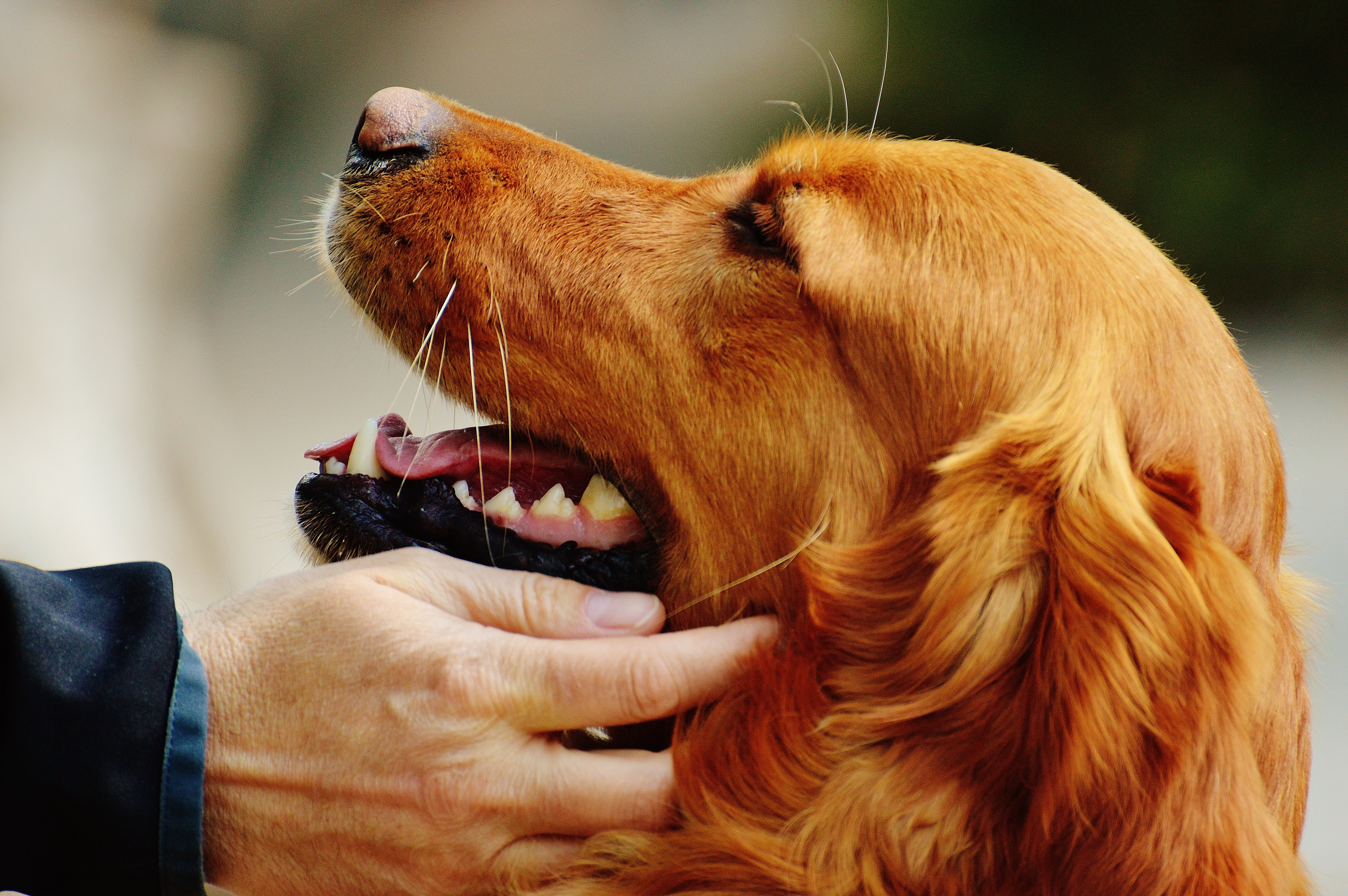
A generalised linear mixed model was used to analyse the results which revealed several differences between the two conditions. In the Forced Touch condition, dogs displayed significantly more ear-back behaviour, which is widely recognised as a sign of stress, compared to in the Force-Free Touch condition. This suggests that whilst therapy dogs might appear calm on the surface, they are actually displaying subtle signs of stress.
Researchers also found that when given the freedom to choose their behaviour, dogs opted to explore their environment over interacting with the participant. However, the dogs still spent almost 78% of their time within arm’s reach of the participant, implying that they weren’t as much avoiding them, as prioritising other behaviours in the same space.
Some dog sex differences were also observed, with male dogs displaying significantly more avoidance behaviours than females. However, males were also significantly more likely to expose their stomach, indicating perhaps relaxation or submission. Overall, more research is needed to fully understand any possible sex differences, especially since all dogs had been either neutered or spayed.
Study implications and recommendations
Although previous research has found that dogs experience a boost in the so-called love hormone, oxytocin, when interacting with strangers, the findings of this study also show that the animal-assisted therapy situation can be stressful for dogs. It is important to address stress in working dogs not only for welfare reasons, but also to prevent health problems and burnout.
The findings of the study demonstrate the importance of giving therapy dogs some control over who and how they interact with people. This can be achieved in multiple ways, including allowing dogs to roam free or by providing private dog-only space, such as a crate. It’s also important to emphasise that interacting with a dog doesn’t necessarily mean touching them. The person could throw a toy, for example, although this would require organisations like Pets As Therapy to relax their rules.
Key study findings:
- Dogs in the Forced Touch condition displayed significantly more ear-back behaviour
- Dogs in the Force-Free Touch condition opted to explore their environment over interacting with the participant
- Dogs in the Force-Free Touch condition still spent almost 78% of their time within arm’s reach of the participant
- Some dog sex differences were present, although more research is needed

 The Power of Pets
Leave a comment