Researchers investigate if dog ownership can promote physical activity in children.
Being physically active is crucial to supporting children’s health, including maintaining a healthy weight and cardio-respiratory fitness. Physical activity can also help protect children’s mental wellbeing by reducing feelings of stress and anxiety, and boosting mood. Yet despite this, less than half of children in the UK meet the Chief Medical Officers’ guidelines of 60 minutes or more exercise a day.
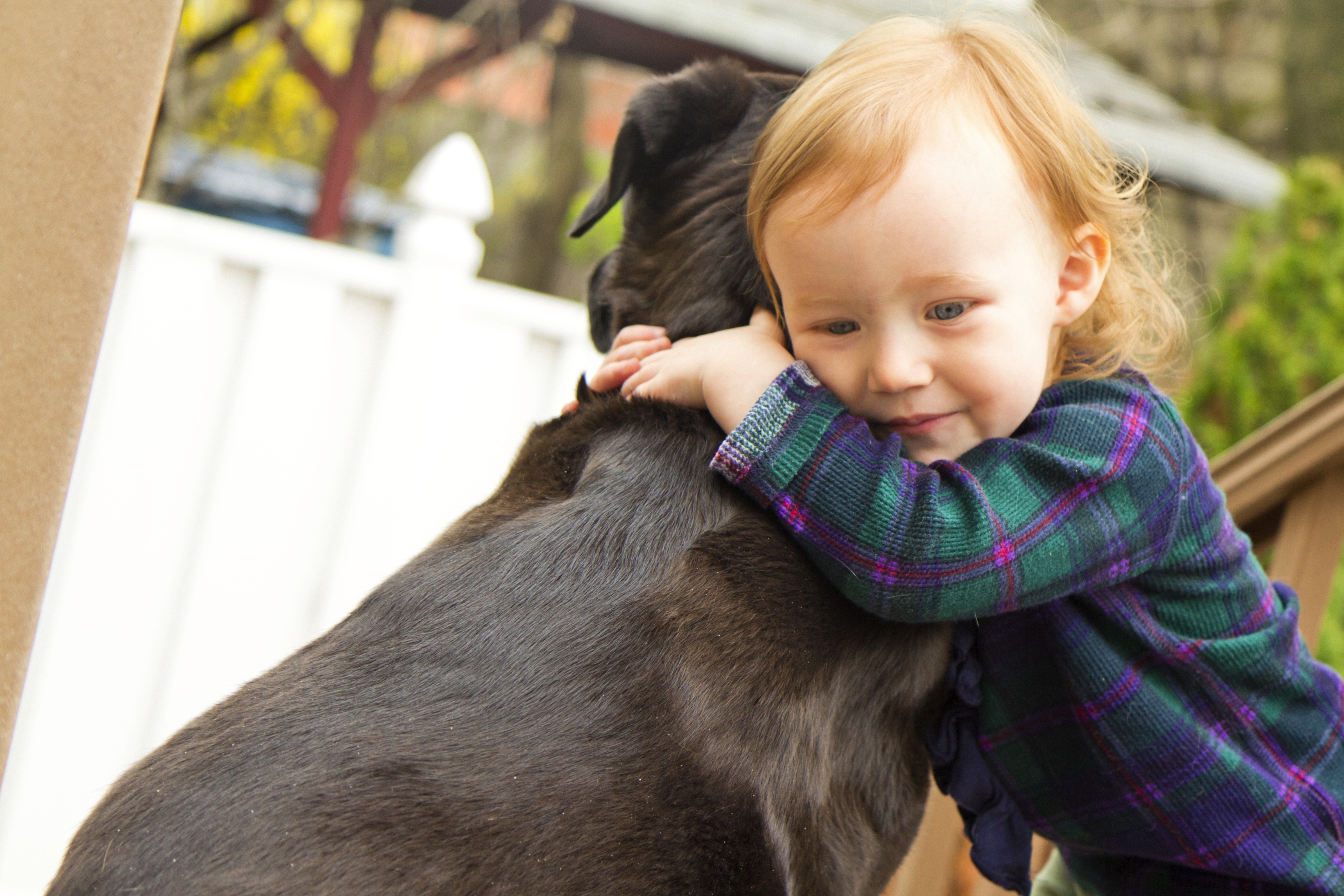
Dog ownership is often reported to boost a person’s activity levels, especially in older adults. Ways that dogs can do this is through walking, playing, and the activities needed to care for a dog. For this reason, a recent study investigated the longitudinal impact of dog ownership on children’s physical activity, revealing valuable insights into the role dogs can play in promoting a healthy lifestyle for young children.
New research into children’s activity
The Play Spaces and Environments for Children’s Physical Activity (PLAYCE) cohort study captured data from children in Perth, Australia, in two waves. The first wave included preschool children aged between two and five years old and followed up in a second wave after they had started school, aged five and seven years. The study into the impact of dog ownership utilised a subset of 600 children from the PLAYCE cohort and categorised them into four groups: continuing non-dog owners (307 children), continuing dog owners (204 children), dog acquired (58 children) and dog loss (31 children).
The study collected daily physical activity data, sedentary time, screen time and sleep using accelerometers and parent-report surveys to measure the impact of dog ownership on children’s movement behaviours over time. Using a natural experiment, changes in dog ownership between preschool to school was used to explore the effect of dog ownership on children’s physical activity.
Changes in children’s physical exercise
The results revealed that girls that acquired a dog enjoyed a significant increase in their levels of light intensity activities and games (+52 minutes per day). Both girls and boys who acquired a dog increased their levels of unstructured activity by approximately seven occasions per week. These findings show the potential for dog ownership to increase children’s physical activity levels, especially unstructured activity such as play and dog walking.
On the other hand, losing a dog was related to a reduction in children’s physical activity, especially for girls, who experienced a reduction of 62.1 minutes per day in their light intensity activities and games. Girls and boys who lost a dog also experienced a reduction in their unstructured physical activity of 10.2 and 7.7 occasions per week, respectively.
For children who continued to own a dog, no significant differences in their activity levels were observed compared to non-dog owners. This suggests that whilst acquiring a dog can temporarily boost children’s physical activity levels, it is not maintained. Dog ownership was also found not to significantly impact children’s sleep time, and no consistent influence was observed on screen time either.
Study implications
The findings of this study suggest that dog ownership can have a positive impact on children’s physical activity levels. In particular, dogs facilitated unstructured play and outdoor activities. These differences were larger for girls who were more impacted by both acquiring and losing a dog, perhaps due to social and cultural norms which result in girls’ typical activity levels being lower, or due to the socioemotional support provided by dogs which helped boost their activity levels.
The finding that continued dog ownership did not maintain children’s physical activity at a higher level compared to non-dog owners suggests that children may stop engaging in exercise with their dog or perform it in place on other types of physical activity. The latter explanation is supported by a recent study in older adults which found no difference in the leisure time activity of dog and cat owners, suggesting that dog walking is performed instead of other physical activity, rather than in addition to.
Overall, the findings demonstrate the importance of bearing in mind dog acquisition and loss when considering children’s physical activity during the transition from preschool to school. The study shows that the benefits of pet ownership can start very young, but more research is needed to understand how dog-related activity impacts other types of physical activity in girls and boys.
Key study findings:
- Girls and boys who acquired a dog increased their unstructured activity levels
- Losing a dog was associated with a reduction in children’s physical activity
- No difference in activity levels for children who continued to own dogs compared to non-dog owners
- Dog ownership did not impact children’s sleep or screen time consistently

 The Power of Pets
Leave a comment